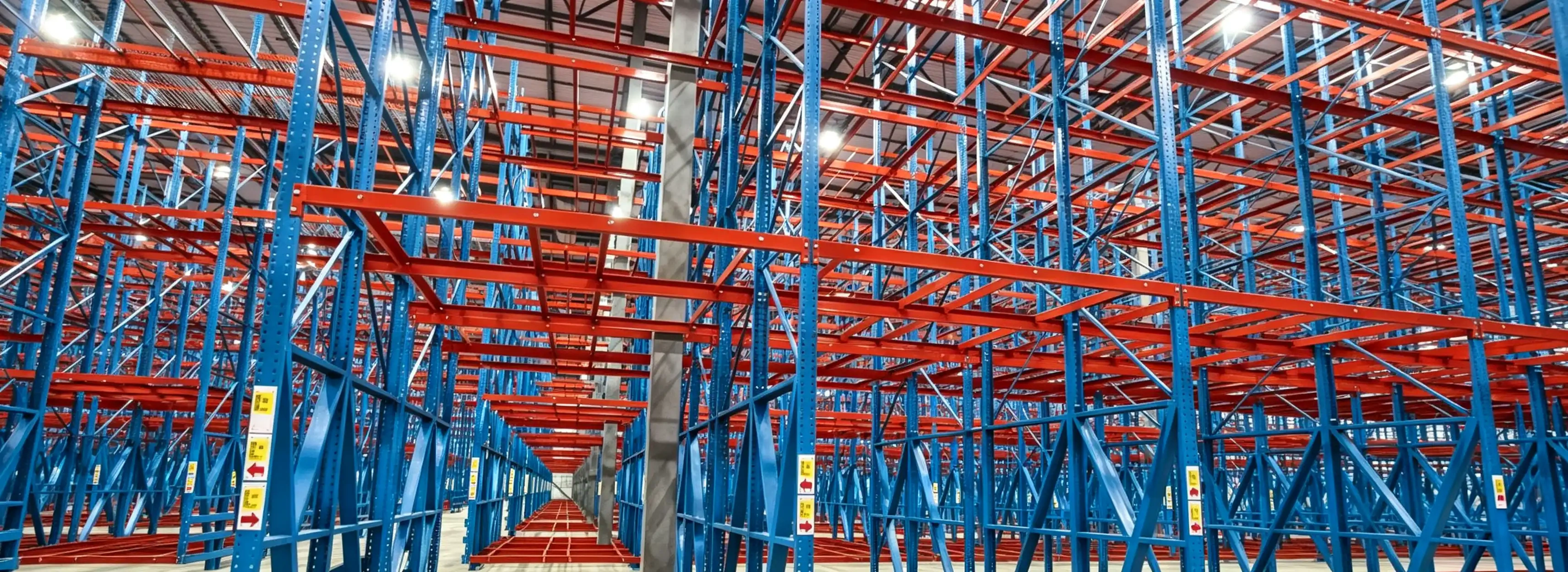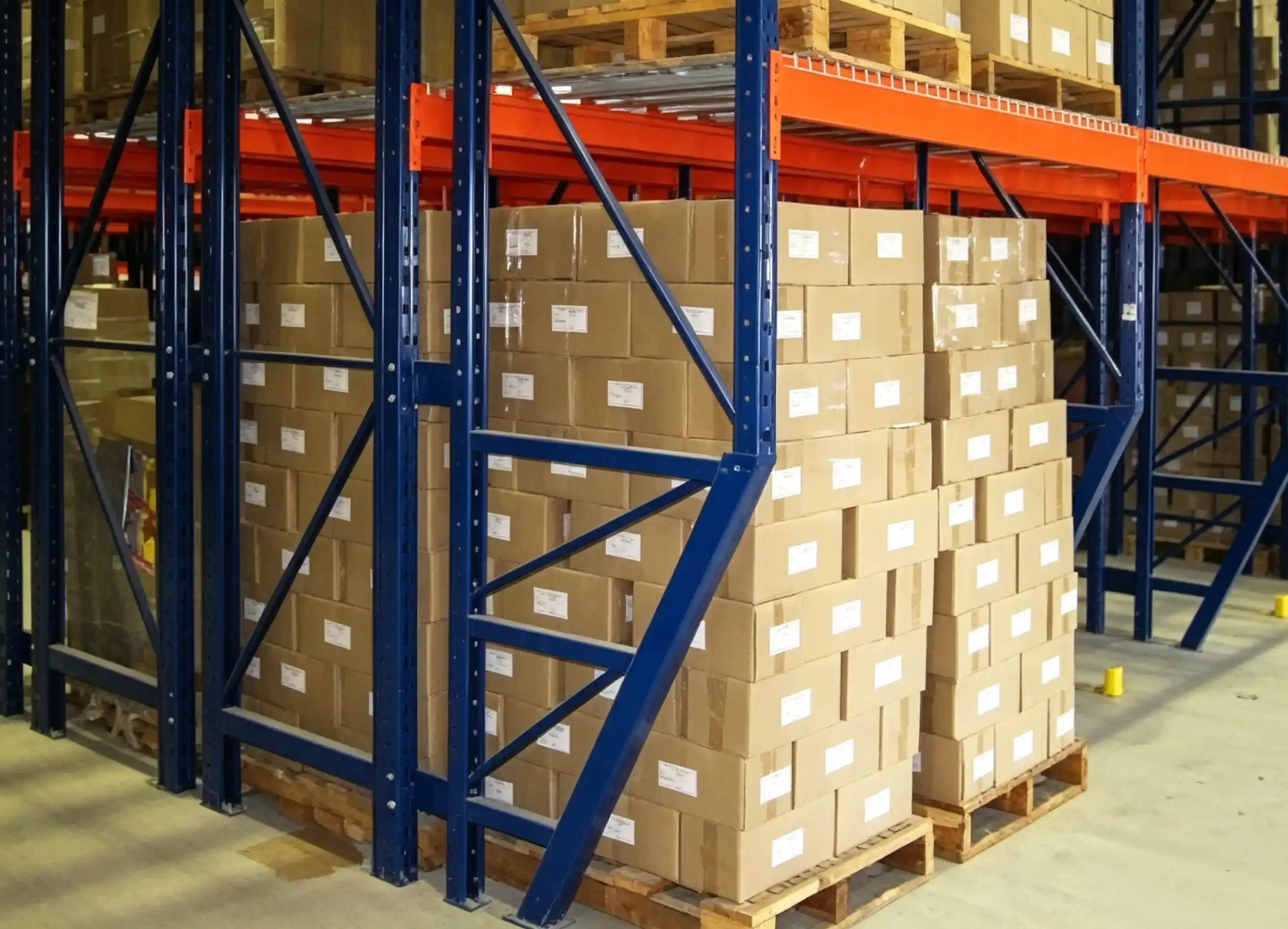
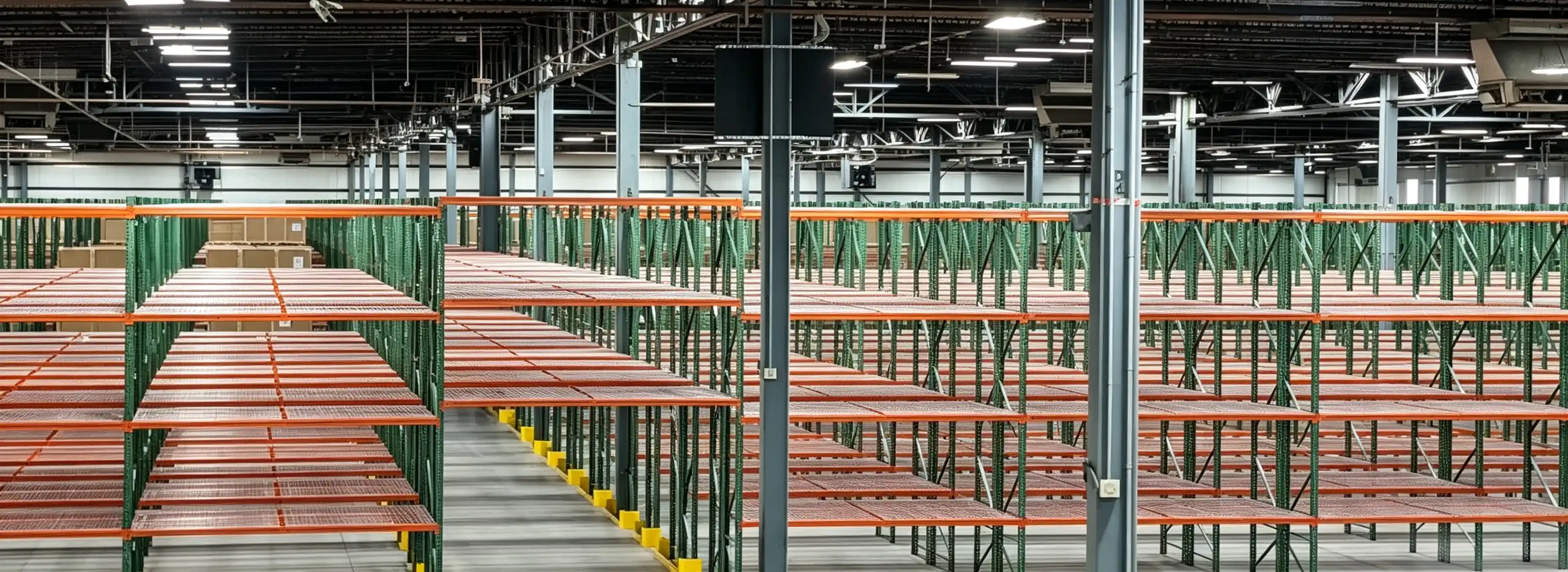
Double Deep Pallet Racking

  • A superior high-density warehousing solution with a double-layer layout, significantly improving warehouse space utilization. Paired pallet storage reduces aisle obstruction, expanding storage capacity without requiring additional space. The reinforced overall structure, coupled with specialized protective accessories, ensures stable and reliable operation under heavy loads.

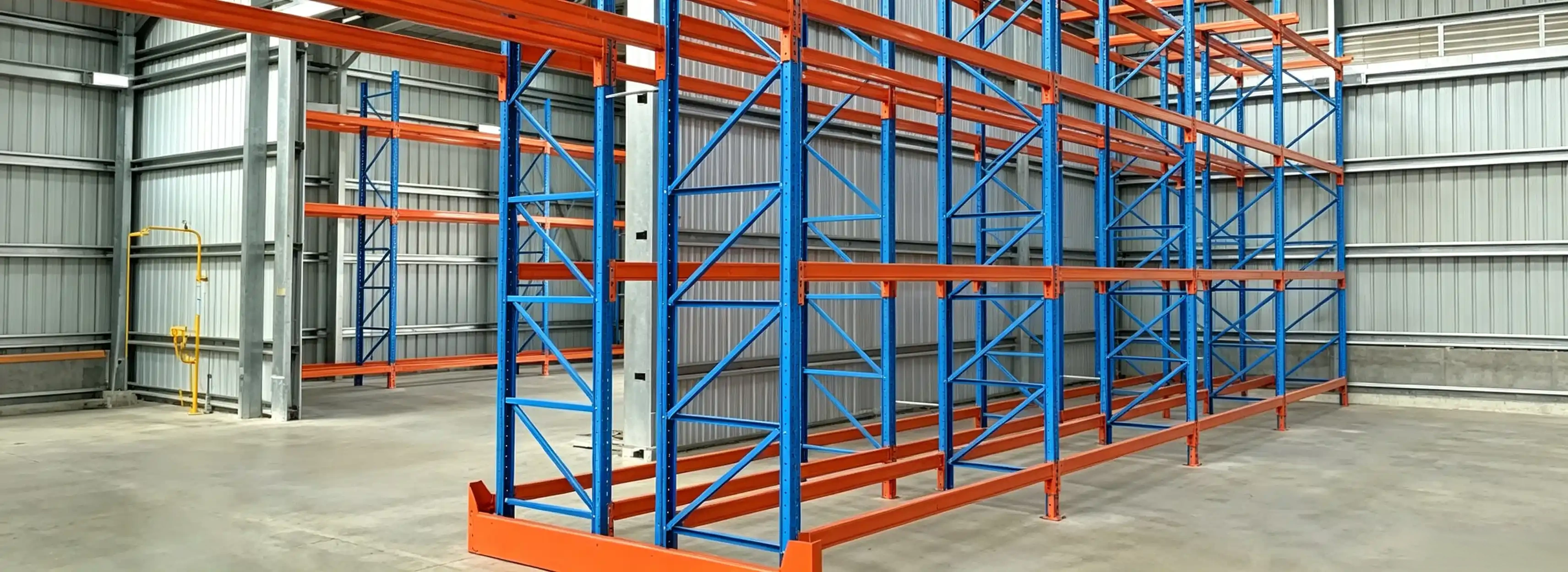
Double-deep pallet racking is a core piece of warehousing equipment for increasing warehouse storage density, suitable for various factories and logistics warehouses. Choosing the right double-deep racking can improve warehouse capacity utilization and save on warehousing costs. Let's take a closer look at this storage equipment!

Capacity:10-400TPH
Capacity:10-400TPH
Capacity:10-400TPH

Advantages of Double Deep Pallet Racking

For those looking to store more palletized goods within a limited warehouse space while maintaining convenient access, double-deep pallet racking is an ideal high-density storage solution. Below, we'll detail the core features and practical value of this racking system.

High warehouse capacity utilization, significantly increased storage capacity

Compared to ordinary selective racking, it reduces redundant forklift aisles, achieving warehouse space utilization of 80%-90%, allowing for more goods to be stored in the same area; its storage density falls between ordinary beam racking and high-density storage systems, balancing storage capacity and access convenience, suitable for most large-volume storage scenarios.

Balanced access efficiency, faster goods turnover

Utilizing a Last-In-First-Out (LIFO) model, half of the goods can be directly and quickly accessed, simplifying operations and significantly reducing forklift operation time, accelerating overall inventory turnover, and balancing batch preparation and outbound efficiency.

High versatility, adaptable to various goods loads

Compatible with palletized units of various sizes and weights, applicable to a wide range of industries; easy disassembly, reassembly, and parts replacement processes, allowing for flexible modification and expansion of racking layouts when warehousing needs change.

Convenient construction and maintenance, low modification costs

The structure is compatible with conventional adjustable racking, saving time and labor in on-site setup, disassembly, and parts replacement; warehouse expansion or adjustments to storage locations do not require large-scale replacement of the entire system. Complete accessories, high operational safety

Complete accessories, high operational safety

Can be equipped with various safety accessories such as support beams, protective locking pins, and foot guards to effectively prevent pallet falls and forklift collisions that could damage the racking, thus mitigating potential safety hazards in warehouse operations.

Corrosion-resistant and durable, easy to manage and trace

JULI racking's entire upright frame uses a pre-galvanized process, making it rust-proof, corrosion-resistant, and with a longer service life. It also features a dedicated traceability system for convenient inventory, maintenance, and record management of racking equipment.

Double deep pallet racking application

Choosing the right asphalt plant depends on your specific needs, such as asphalt mixing plant capacity capacity, mobility, budget, and project requirements. Below is a concise guide to help you learn how to choose the right asphalt plant:
Consumer Goods Warehouse
The warehouse features uniform product styles and large inventory per item, with multiple identical pallets stackable in a single location. A robust inventory system ensures that even if a small number of inner pallets are not immediately available, daily operations remain unaffected, balancing total storage capacity with basic picking needs.
Low-Temperature Cold Storage
The racking significantly reduces forklift aisle space, maximizing the use of costly temperature-controlled storage areas. Suitable for goods with long turnover cycles, but not for perishable or short-shelf-life items
Third-Party Logistics Warehousing Park
Eliminates the need for frequent individual pallet handling, optimizing overall warehouse space utilization. A mature inventory management system balances storage density and retrieval efficiency.
Manufacturing Plant Warehouse
Used to store standardized raw materials, bulk parts, and finished products. High product homogeneity and large batches make it suitable for medium- to long-term storage, significantly increasing warehouse storage capacity
Dedicated Warehouse for Small SKUs and Large Volumes
This warehouse features a single product category and ample stock of similar items, minimizing the need for immediate picking of all pallets. It leverages an inventory system to manage inner-layer inventory, striking a balance between storage capacity and ease of access
Dedicated Warehouse for Medium- to Long-Term Stockpiling
This warehouse accommodates goods with longer turnover cycles, using a last-in, first-out (LIFO) racking system. It is not suitable for perishable goods such as fresh produce. Its structure is compatible with standard beam racks and accommodates various standard unit pallet loads
If your warehouse has large volumes of goods with few product categories and you want to improve warehouse utilization, we welcome you to choose double-deep pallet racking for a customized warehousing solution.If your warehouse has large volumes of goods with few product categories and you want to improve warehouse utilization, we welcome you to choose double-deep pallet racking for a customized warehousing solution.If your warehouse has large volumes of goods with few product categories and you want to improve warehouse utilization, we welcome you to choose double-deep pallet racking for a customized warehousing solution.If your warehouse has large volumes of goods with few product categories and you want to improve warehouse utilization, we welcome you to choose double-deep pallet racking for a customized warehousing solution.If your warehouse has large volumes of goods with few product categories and you want to improve warehouse utilization, we welcome you to choose double-deep pallet racking for a customized warehousing solution.

double deep pallet racking specifications

The following are the complete standardized technical specifications for double-deep pallet racking, covering load capacity, dimensions, storage modes, on-site operations, and safety accessories. These specifications can be used as a reference for warehouse planning, solution quotations, and equipment selection.
System Parameters
Pallet Load Capacity: Single pallet load capacity 500–1000 kg, maximum total load capacity of a single beam layer 3000–4000 kg Overall Racking Height: Standard 8 meters to 12 meters, adjusted according to warehouse clearance height Space Utilization: High-density storage, overall warehouse space utilization rate can reach 80%-85% Goods Storage and Retrieval Mode: Last-In-First-Out (LIFO)
Component Dimensions
Upright Frame Depth: Customizable to pallet size, standard 800 mm to 1200 mm Total shelf depth must accommodate two sets of standard pallets, with a 75 mm safety clearance in between Beam Length: 2585 mm to 3900 mm, each beam can hold two to three pallets Beam Vertical Spacing: Adjustable between 1 meter and 1.2 meters to accommodate pallets of different heights
These technical parameters are the core basis for warehouse planning, forklift selection, and racking safety load-bearing design, directly determining storage capacity and operational safety.

how much does double deep pallet racking cost?

The cost of a single double-deep pallet rack ranges from $80 to over $300, influenced by rack height, rated load capacity, and unit rack structure configuration. A standard 4-6 pallet unit rack costs between $500 and $1800. Cost fluctuations are also linked to factors such as steel market prices, surface anti-corrosion processes, and the thickness and reinforcement level of beams.
Main Structure Manufacturing Cost of Shelving
The core cost is the main steel material and beam structure. The unit price for a basic standard steel structure pallet is $80–$150 per unit; the unit price for a heavy-duty pallet with thickened reinforcement and electrostatic powder coating for corrosion protection is $200–$300 per unit. This cost is directly affected by fluctuations in the international steel market and real-time exchange rates. Increased raw material prices or exchange rate fluctuations will significantly change the ex-factory price of the shelving.
Construction and Accessory Expenses
Installation service fee: An additional $15–$50 is charged per pallet location, with the price varying depending on the warehouse height and on-site construction difficulty. Safety accessory investment: Protective accessories such as upright guards, guide rails, and wire mesh are essential and will increase the overall initial budget. Lack of these accessories increases the risk of forklift collision damage.
Cross-border Logistics and Import Taxes & Fees
Exporting goods incurs total ocean freight costs. Upon customs clearance in the destination country, corresponding tariffs, value-added tax, and other taxes must be paid. Ocean freight costs fluctuate with shipping market conditions, and tax standards are adjusted according to the customs policies of each country, representing an additional expense that cannot be ignored during procurement.
Initial Professional Site Planning Costs
Double-deep racking has stringent requirements for aisle width and ground load-bearing capacity. Professional engineers must optimize the warehouse layout and conduct site surveys to calculate the concrete load-bearing capacity and racking arrangement. This stage incurs specialized site design consulting fees, and improper planning can directly affect the safe use of the racking.
Additional Investment in Dedicated Forklifts
Standard reach trucks cannot access inner pallets, necessitating the purchase or upgrading to dedicated deep-reach scissor forklifts. The additional budget for a single forklift is $50,000–$80,000, representing a significant hidden fixed expense for the project. Without the corresponding forklifts, the racking cannot be fully operational.
Long-term Operation and Maintenance and Subsequent Upgrade Costs
Daily Maintenance: Long-term forklift collisions and heavy cargo pressure will cause wear and tear on beams and columns. Regular inspections and replacements of damaged components will incur ongoing maintenance costs. Rack Upgrades and Renovations: When the specifications and storage capacity of warehouse goods increase in the future, the racks can be expanded in height and width. Upgrades and renovations will incur additional renovation costs.
Reasonably match load-bearing specifications and standardize shelf dimensions to reduce customization; integrate the procurement of accessories and installation packages simultaneously; plan the warehouse layout in advance to avoid later modifications; and maintain the shelves in the long term to reduce replacement costs.

Contact Us Now!

Contact us now via email: info@stackshelves.com, or fill in the form below.

Please specify your requirement by referring to the following aspects:

    1- Describe the type of project (e.g., logistics warehouse, cold storage, factory workshop, tire storage center, e-commerce fulfillment hub, etc.).

    2- List the specific racking or type (e.g., pallet racking, cantilever racking, tire racking, industrial shelving, heavy duty storage rack, etc.).

    3- Tell us your estimated rack installation or project launch date.

    4- Detail your specific requirements or expectations (e.g., warehouse size, load capacity, storage environment, etc.).

    5- If you are interested in becoming our distributor, please let us know.

*We respect your privacy, and will not share your personal information with other entities.

Contact Us Now!

Contact us now via email: info@stackshelves.com, or fill in the form below.

Please specify your requirement by referring to the following aspects:

    1- Describe the type of project (e.g., logistics warehouse, cold storage, factory workshop, tire storage center, e-commerce fulfillment hub, etc.).

    2- List the specific racking or type (e.g., pallet racking, cantilever racking, tire racking, industrial shelving, heavy duty storage rack, etc.).

    3- Tell us your estimated rack installation or project launch date.

    4- Detail your specific requirements or expectations (e.g., warehouse size, load capacity, storage environment, etc.).

    5- If you are interested in becoming our distributor, please let us know.

*We respect your privacy, and will not share your personal information with other entities.