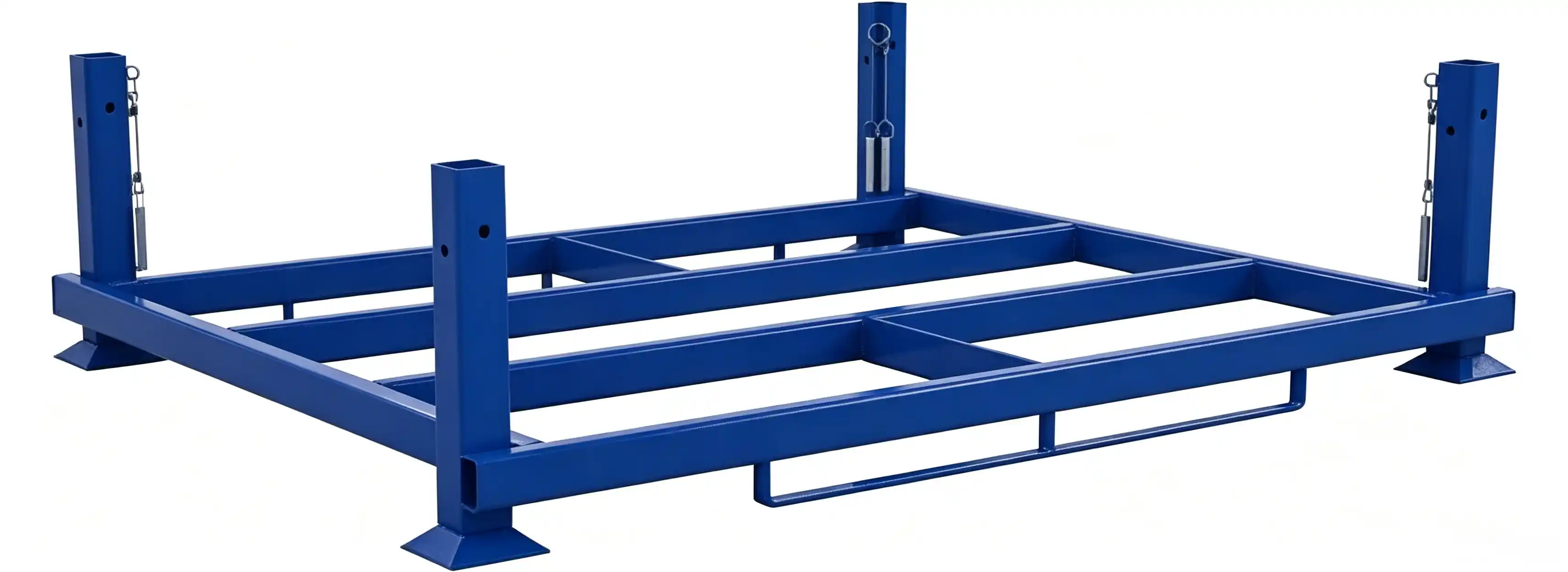
Stacking Rack

  • Reliable Asphalt Production – Asphalt Mixing Plant for Smart Control & Efficient Production; Produce More, Waste Less: 20% faster output with 15% lower fuel costs vs. standard plants.; No Compromise on Quality: High-grade asphalt for roads lasting 10+ years, batch after batch.

Asphalt mixing plant is essential for producing high-quality asphalt mixtures for road construction, maintenance, and repairs. Whether for highways, city roads, or bridges, the right asphalt mixing equipment ensures better quality, saves time, and reduces costs. In the following, let’s learn more about the asphalt plant equipment!

Capacity:10-400TPH
Capacity:10-400TPH
Capacity:10-400TPH
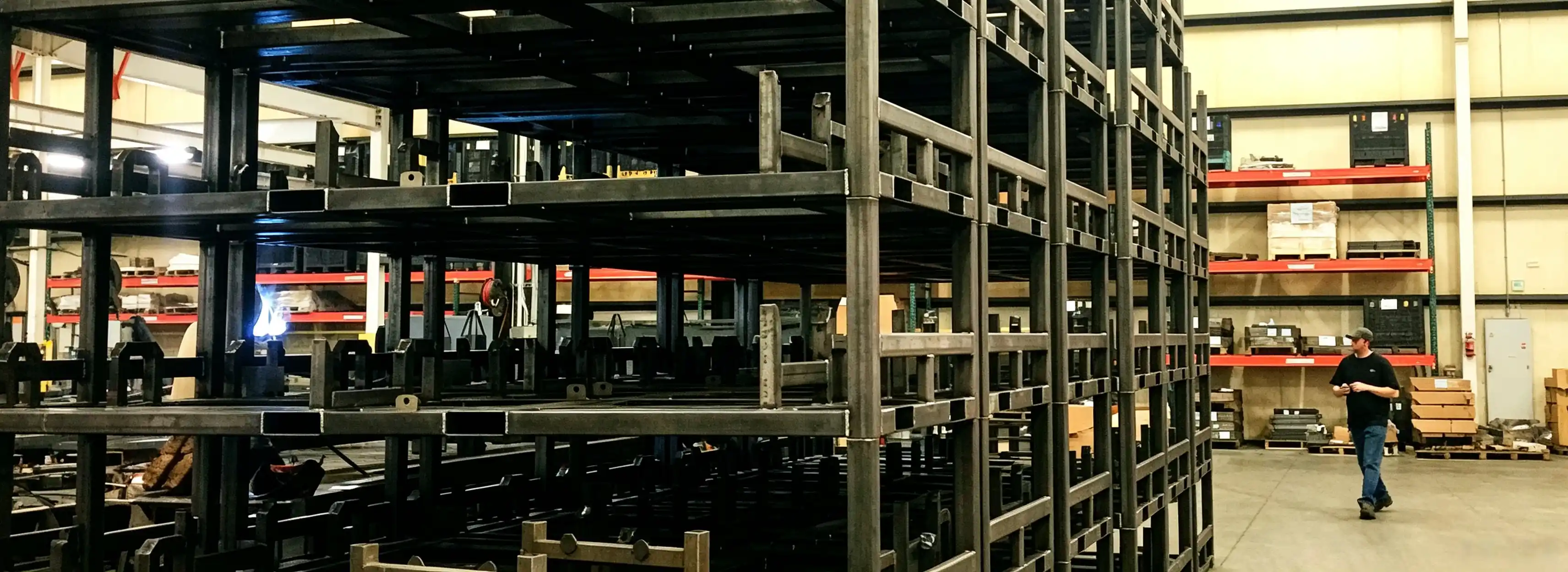
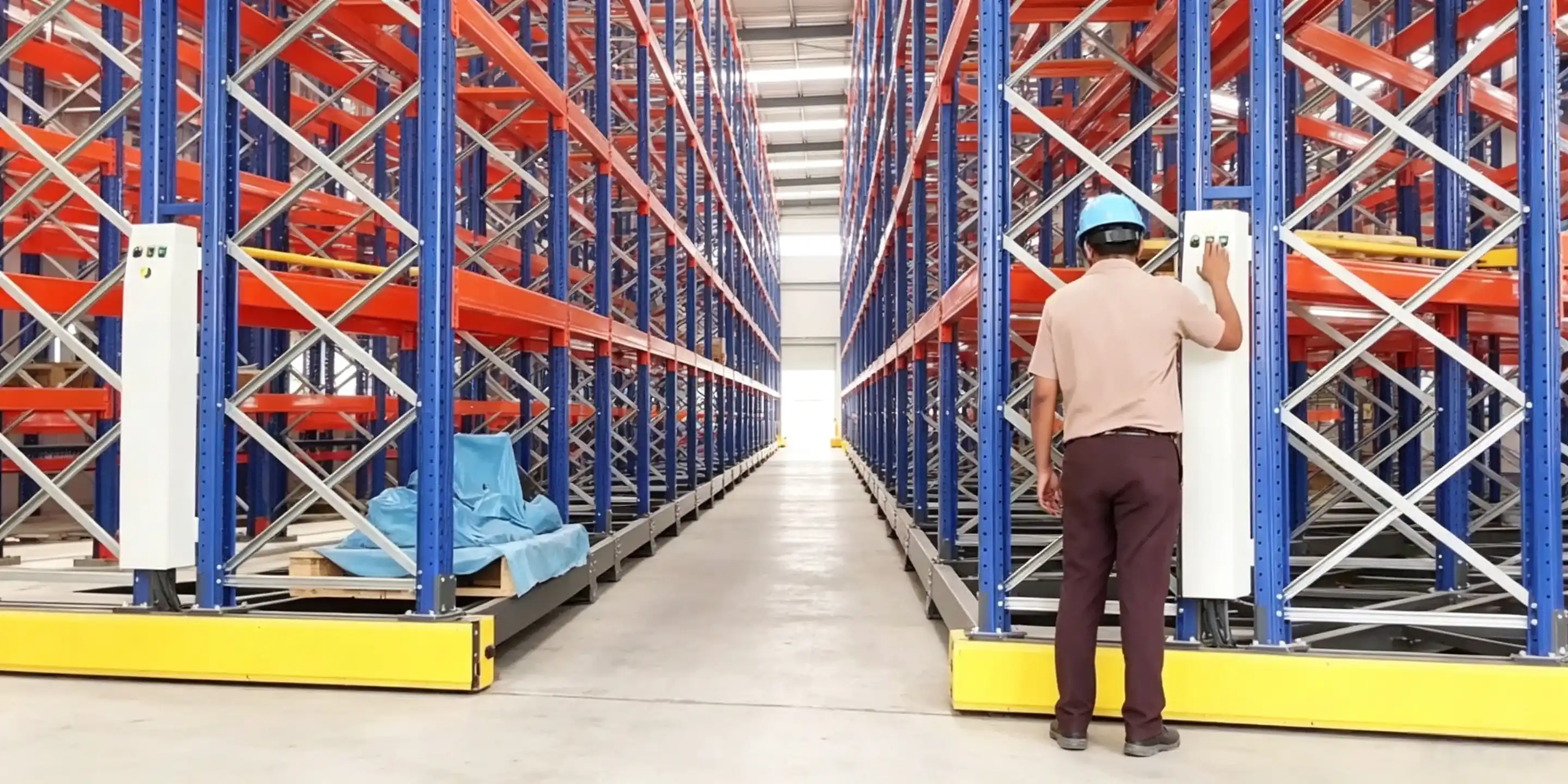
JuliRacks stack racks for sale are widely used globally.
JuliRacks stacking racks are sold worldwide, adapting to various warehousing formats and material storage needs across different industries. Applicable scenarios cover a wide range of warehouses and production plants. Successful case studies are as follows:

Stacking Rack

Stacking Rack

How Stacking Rack Works: Modular Assembly, Interlock Stacking & Integrated Moving

This stacking rack adopts modular plug-in assembly and nested interlocking design as the core bearing structure. Each component is precisely matched to realize quick assembly, multi-layer safe stacking and overall forklift transfer. Below we elaborate on its complete operating mechanism from assembly, stacking to handling.

Modular Plug-in Assembly Structure

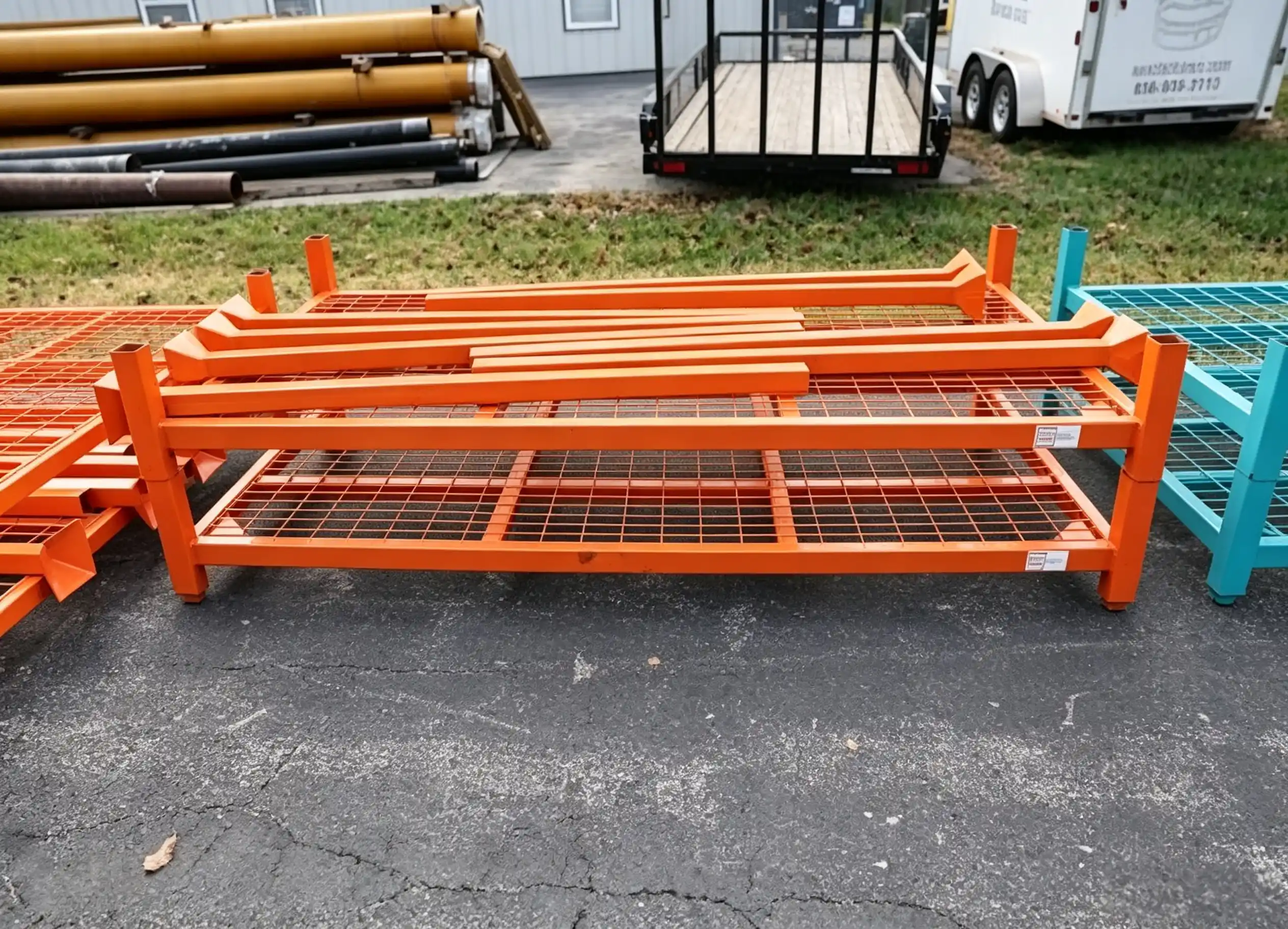
This stackable tubular shelving adopts a boltless modular assembly design, with high-precision embedded positioning holes pre-embedded at the four corners of the reinforced flat base. Removable support columns and isolation sleeves can be directly plugged into the base holes to form a one-piece rigid load-bearing frame. The overall structure is stable, requiring no welding on-site. When not in use, it can be quickly disassembled and laid flat for storage, significantly saving unused floor space.

Nested Interlocking Stacking Principle

All support columns have customized tapered nesting locking ends at both the top and bottom. During multi-layer forklift stacking operations, the bottom feet of the upper shelf automatically align and engage with the nesting slots at the top of the lower column. Relying on the mechanical interlocking structure, horizontal offset and lateral swaying of the shelving are limited, achieving safe layered stacking under heavy loads and eliminating safety hazards such as slippage, detachment, and tipping during storage

Integrated Forklift Transfer Principle

Unlike fixed welded shelving, the assembled shelving is an independent load-bearing unit, with a standard forklift access channel pre-installed in the base. Shelves fully loaded with pipes and profiles can be forked and transported together with the goods, and placed in place. They can flexibly complete warehouse relocation, centralized sorting of goods, and direct loading of trucks, simplifying warehouse material turnover and outbound handling processes and improving warehousing efficiency.

How to Choose the Right Stacking Racks types ?

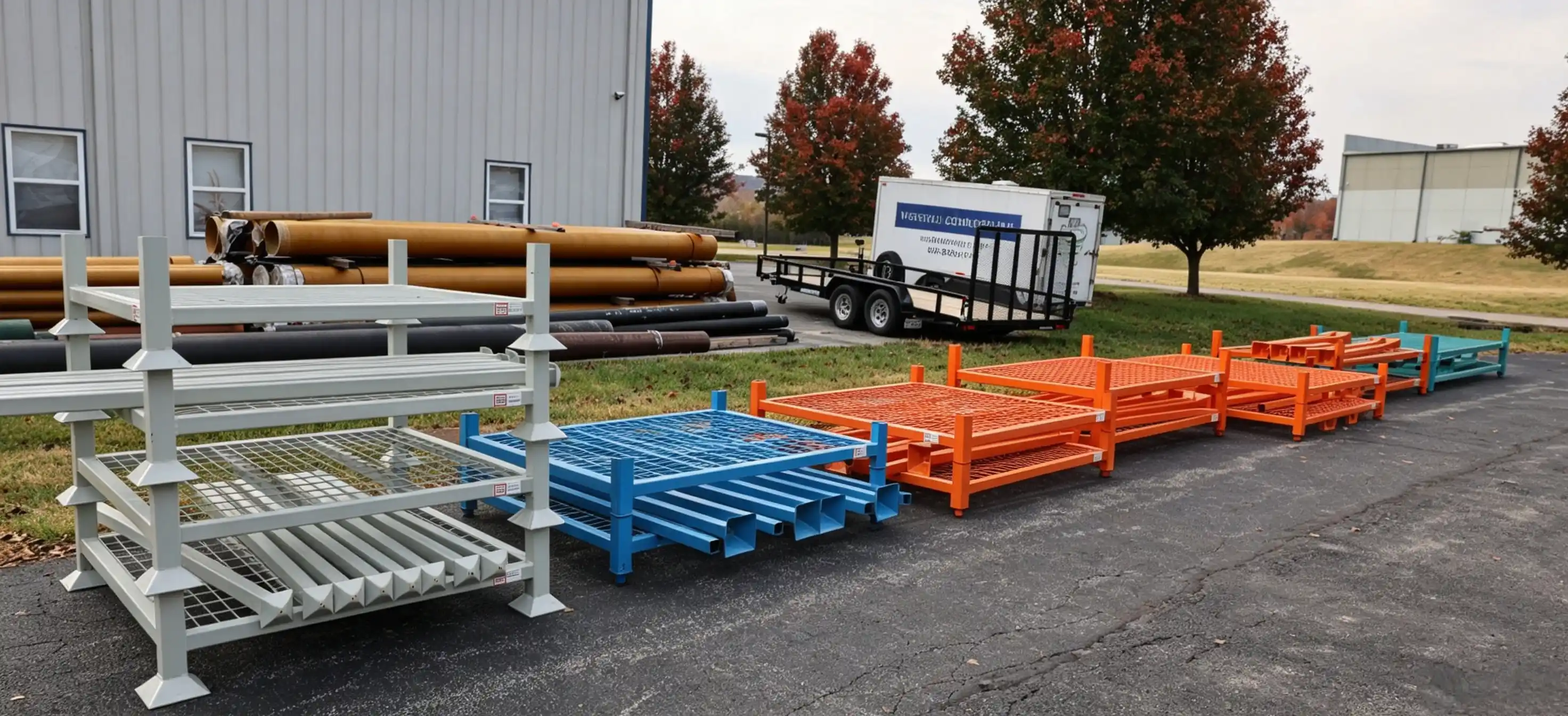
Based on the type of goods, warehousing model, peak and off-peak season turnover, and logistics transportation needs, stacking racks are divided into several differentiated categories. Each category features a specifically optimized structural design to address the pain points of warehousing in different industries. The following is a detailed classification and introduction to its corresponding advantages.
Portable Stacking Racks
Advantages: A standard, widely used model with a thickened, load-bearing base and detachable uprights; suitable for forklift transport, allowing for flexible warehouse layout adjustments to adapt to seasonal inventory fluctuations; highly versatile and with lower procurement costs.
Modular Stacking Racks
Advantages: Uses integrated fixed uprights instead of separate columns, resulting in a more robust locking structure; multi-layer stacking prevents shifting; allows for the construction of high-density storage areas, suitable for long-term, stable, large-volume storage; offers superior load-bearing capacity and safety.
Collapsible/Folding Racks
Advantages: Uprights and sides can be folded down for storage, reducing floor space by up to 75% when nested; significantly saves warehouse storage space during idle periods; lower logistics costs for short-distance transport of empty racks; suitable for companies with fluctuating inventory and seasonal stocking needs.
Nestable Stacking Racks
Advantages: The overall frame features a tapered interlocking structure, allowing multiple racks to nest tightly together when empty; significantly increases loading capacity for empty rack return trips and cross-warehouse transfers, reducing empty container transportation costs. Ideal for short-term temporary storage and rental turnover scenarios.
Specialty Stacking Racks
Advantages: The tabletop can be equipped with various structures such as a hollow frame, solid wood paneling, and metal mesh; specifically designed for non-palletized irregularly shaped goods such as pipes, tires, carpet rolls, and chemical drums; custom-made to fit the material's size and shape
Pipe Stacking Racks
Advantages: Extended cantilevered layered structure for layered and zoned storage of round pipes, square pipes, and aluminum profiles; prevents material damage during storage and retrieval; multi-layer stacking provides strong load-bearing capacity, effectively solving the problems of messy and space-consuming stacking of long profiles; ideal for building materials and pipe processing plants.
Cage Stacking Racks
Advantages: Protective mesh around the edges prevents small, loose items from slipping and getting lost; doors facilitate manual picking; combines stacking functionality with cargo protection, suitable for storing small finished auto parts and hardware.
Heavy-Duty Anti-slip Stacking Racks
Advantages: Anti-slip textured base with reinforcing ribs; thickened steel welding significantly increases single-layer load-bearing capacity; prevents slippage and deformation during heavy-duty stacking, suitable for high-load storage scenarios such as metal castings, heavy hardware, and full cases of heavy goods.
Various types of stacking racks are suitable for different warehousing scenarios, such as dynamic turnover, high-density storage, space-saving storage, and storage of irregularly shaped materials. The full range of products covers both general and specialized warehousing needs, featuring mature structures and strong practicality. If you have warehouse storage planning requirements, please provide the specifications of your goods and site parameters, and we will match you with a suitable stacking rack solution.

Stacking Racks Price: What You Need to Know

The pricing of stacking racks is comprehensively determined based on steel material, load-bearing capacity, structural style, customization process, and procurement volume, resulting in clear and transparent price tiers. We cater to various procurement models, including standard spot procurement at cost, large-volume project procurement, and non-standard customized solutions. We strictly control production costs and ex-factory premiums, providing global customers with highly adaptable and cost-effective warehousing selection quotes.
Raw materials and anti-corrosion processes
Steel market prices, plate thickness, and special alloy materials directly determine basic costs. Different anti-corrosion treatments such as painting, powder coating, and hot-dip galvanizing have significant price differences. High-weather-resistant coatings specifically designed for coastal areas and cold storage facilities will further increase costs.
Dimensions, load-bearing capacity, and reinforcement structures
The greater the rack height and the higher the rated load per layer, the more steel materials and reinforcement processes are required. In earthquake-prone areas, additional diagonal bracing and thickened connecting plates are needed for earthquake resistance, increasing costs by 20%-30%.
Customization and optional accessories
Standard universal stacking racks offer the best cost-performance ratio. Additional accessories such as wire mesh panels, foot guards, casters, and fall protection nets, as well as non-standard styles with tires/pipes, will increase design, material, and processing costs.
Differences in production and processing processes
Precision processes such as laser cutting and robotic automated roll forming welding have higher labor and mold costs than ordinary manual welding. Small custom orders cannot amortize mold opening and debugging costs, resulting in significantly higher unit prices. Large-volume purchases can reduce the unit price.
Supporting Qualifications and Brand Services
Export compliance certifications such as CE, ISO, and seismic testing incur testing and auditing fees; reputable manufacturers with complete quality inspection and long-term warranty after-sales service command a reasonable brand premium compared to smaller, unreliable factories.
Differences in Selecting New and Used Shelving
New shelving offers stable durability, while refurbished shelving has a lower entry barrier, but its price fluctuates depending on its age, wear and tear, and structural integrity.
Export-Specific Packaging Standards
Simple wrapping with stretch film is inexpensive, but wooden pallets and moisture-proof, rust-proof, and sealed packaging required for export orders will increase packaging costs.
Cross-border Logistics and Transportation Costs
Stacking racks are heavy and bulky; distance from the manufacturer, international oil prices, shipping rates, and transportation channels all directly affect the final purchase price.
Our plant asphalt uses intelligent, green, and low-carbon technologies to provide efficient, cost-effective solutions. Each technology is designed to boost productivity, reduce costs, and meet top environmental standards, helping you stay at the forefront of sustainable construction.

Reasons for choosing stacking racks

Many warehouses suffer from problems such as insufficient space, rigid layout, fragile goods, high labor costs for transshipment, idle land, and high operation and maintenance costs. Stacking racks specifically address these pain points in warehousing, with the following core advantages:
Optimize Space Utilization, Efficiently Store Idle Areas
Fully utilize vertical storage space in the warehouse, storing more goods within the same footprint; during off-peak seasons, detachable columns allow for nested stacking of multiple racks, significantly freeing up floor space and comprehensively improving warehouse utilization, achieving optimized site height and flexible layout adjustments.
Flexible Adaptability, Supporting Dynamic Inventory Management
Unlike fixed bolt racks, these can be moved, reconfigured, and expanded at any time, easily handling seasonal inventory changes; customized structures are supported to adapt to different order sorting needs, and can be freely adjusted according to factory layout, achieving dynamic, high-density warehouse management.
Comprehensive Protection for Goods, Reducing Material Loss Costs
Goods are stored neatly off the ground, avoiding bumps from personnel and forklift scratches, significantly reducing damage to fragile items and stacked goods; the sturdy and durable rack structure reduces pallet wear and the additional costs of frequent pallet replacements.
Convenient Transfer Operations, Reducing Labor and Improving Efficiency
Fully loaded racks can be transported by forklift to production lines and sorting stations, eliminating secondary handling of goods, simplifying warehousing operations, effectively reducing labor costs, and significantly improving overall operational efficiency
Lower overall investment and long-term cost savings
No need for on-site installation of heavy-duty racks, saving factory construction approval fees; compact storage space reduces factory lighting and heating expenses; long product lifespan, a durable warehousing solution, resulting in lower overall costs in the long run.
Simple and worry-free maintenance, strong scalability
The overall structure requires very little maintenance, cleaning is simple, and subsequent maintenance investment is low; it can be used with automated equipment, and various accessories can be selected to adjust the structure as needed, adapting to diverse warehousing conditions.
Advantages Summary: Stacking racks offer six major advantages: efficient space utilization, flexible layout, goods protection, labor-saving transfer, low investment cost, and easy maintenance. They are suitable for various dynamic warehousing and seasonal stocking scenarios, and long-term use can significantly reduce the overall operating costs of warehouses.

How to reduce the cost of stacking racks?

Many companies often encounter various problems when purchasing stacking racks and operating warehouses, such as exceeding procurement budgets, limited space, rapid rack wear and tear, and lack of after-sales support. Below, we share practical cost-reduction and efficiency-enhancing solutions from three dimensions: procurement selection, space planning, and daily operation and maintenance, comprehensively reducing overall warehousing expenses.
Scientific Selection to Reduce Upfront Procurement Expenses
Multiple Price Comparisons: Compare prices from multiple manufacturers for the same product, prioritizing suppliers with more affordable pricing under the same material and load-bearing standards, thus reducing the procurement budget. Selecting Reliable Original Manufacturer Partners: Prioritize manufacturers with comprehensive after-sales systems, ensuring one-stop solutions for subsequent repairs, parts replacements, and technical guidance, avoiding the problem of lack of support later on. Matching Material Specifications to Needs: Determine the steel plate thickness based on the actual load-bearing capacity of the goods, avoiding the waste of costs caused by blindly selecting thicker profiles; use standardized, universal alternatives. Custom-designed models for easy future expansion and adjustments. High-value second-hand equipment alternatives: Refurbished stacking racks in excellent condition with no structural deformation, reducing procurement costs by up to 30%, suitable for budget-constrained, short-term turnover warehousing scenarios..
Scientific planning and layout to unlock the value of storage space
3D vertical storage design: Maximizing the vertical height of the warehouse for storing goods, reducing floor space occupation, and decreasing factory rental and expansion expenses. High-density storage model transformation: Optimizing the spacing between rack levels to eliminate blank space, combined with a dense storage structure, maximizing the effective storage area of ​​the warehouse. 82% Flexible Storage Solution for Peak and Off-Peak Seasons: Utilizing foldable and nestable designs, inventory can be stacked and organized during off-peak seasons, freeing up significant work area by centralizing empty shelves, eliminating the need for additional spare warehouse rentals.
Comprehensive Process Management to Reduce Long-Term Operational Losses
Adding Anti-Collision Protective Components: Equipped with protective accessories such as column guards to prevent forklift collisions and avoid shelf deformation and damage. Standardizing Warehouse Operations: Providing professional training for forklift operators, ensuring heavy items are placed at lower levels to reduce the center of gravity, and preventing overloading and uneven loading that could lead to tipping and damage. Establishing a Routine Safety Inspection Mechanism: Regularly checking for wear and tear on the shelves, loose welds, and other potential hazards, addressing problems proactively to prevent shelf collapses that could result in product loss and safety accidents.

Application Fields of Stacking Racks

Stacking racks are core equipment in logistics and warehousing systems. They can only fully realize their storage advantages when matched with corresponding warehousing scenarios. Their main application areas and sub-sectors are as follows:
Various Specialized Warehouses
Seasonal Reserve Warehouses: Used for storing goods produced during off-peak seasons and those in seasonal circulation. These warehouses can be located at the origin of goods transportation or at final distribution points, utilizing stacking racks for multi-level, three-dimensional storage. Wholesale Warehouses: Designed for goods requiring high preservation conditions, these warehouses store various goods centrally procured by wholesalers, which are then sorted and distributed to retail stores or lower-level distribution channels. Stacking racks can neatly organize and categorize large quantities of goods. Processing and Refurbishing Transit Warehouses: These warehouses handle refurbishment, disassembly, painting, and modification of goods according to customer needs. They are characterized by small-batch, high-frequency turnover operations and are mostly located in areas with high consumer demand. Stacking racks facilitate rapid material transfer and retrieval.
Specific Industry Application Areas
Automotive and Tire Industry: Open-column stacking racks are suitable for tire factories, auto parts dealers, and auto repair shops for storing tires, effectively preventing tire compression and deformation, and increasing storage density. They can also safely transfer and store heavy components such as engine parts and body panels, facilitating seamless flow between workshops and warehouses. Third-Party Logistics Warehousing: Addresses peak season warehouse congestion and seasonal temporary stockpiling needs; inventory can be disassembled and nested during off-seasons to save space; large-scale block-shaped storage can be achieved within the warehouse without fixed installation. Production and Manufacturing Workshops: Stores semi-finished products on production lines; heavy components awaiting processing are arranged systematically and supplied to workstations nearby; the modular structure allows for flexible adjustment of workstation layout according to production plans, adapting to dynamically changing production rhythms. Construction and Building Materials Industry: Specifically designed for storing irregularly shaped long and narrow materials such as pipes, profiles, and carpet rolls; it can also safely stack heavy building materials such as solid wood boards and metal plates, solving the pain point of standard pallets being unable to accommodate irregular goods.

Contact Us Now!

Contact us now via email: info@stackshelves.com, or fill in the form below.

Please specify your requirement by referring to the following aspects:

    1- Describe the type of project (e.g., logistics warehouse, cold storage, factory workshop, tire storage center, e-commerce fulfillment hub, etc.).

    2- List the specific racking or type (e.g., pallet racking, cantilever racking, tire racking, industrial shelving, heavy duty storage rack, etc.).

    3- Tell us your estimated rack installation or project launch date.

    4- Detail your specific requirements or expectations (e.g., warehouse size, load capacity, storage environment, etc.).

    5- If you are interested in becoming our distributor, please let us know.

*We respect your privacy, and will not share your personal information with other entities.

Contact Us Now!

Contact us now via email: info@stackshelves.com, or fill in the form below.

Please specify your requirement by referring to the following aspects:

    1- Describe the type of project (e.g., logistics warehouse, cold storage, factory workshop, tire storage center, e-commerce fulfillment hub, etc.).

    2- List the specific racking or type (e.g., pallet racking, cantilever racking, tire racking, industrial shelving, heavy duty storage rack, etc.).

    3- Tell us your estimated rack installation or project launch date.

    4- Detail your specific requirements or expectations (e.g., warehouse size, load capacity, storage environment, etc.).

    5- If you are interested in becoming our distributor, please let us know.

*We respect your privacy, and will not share your personal information with other entities.