Drive-through Racking

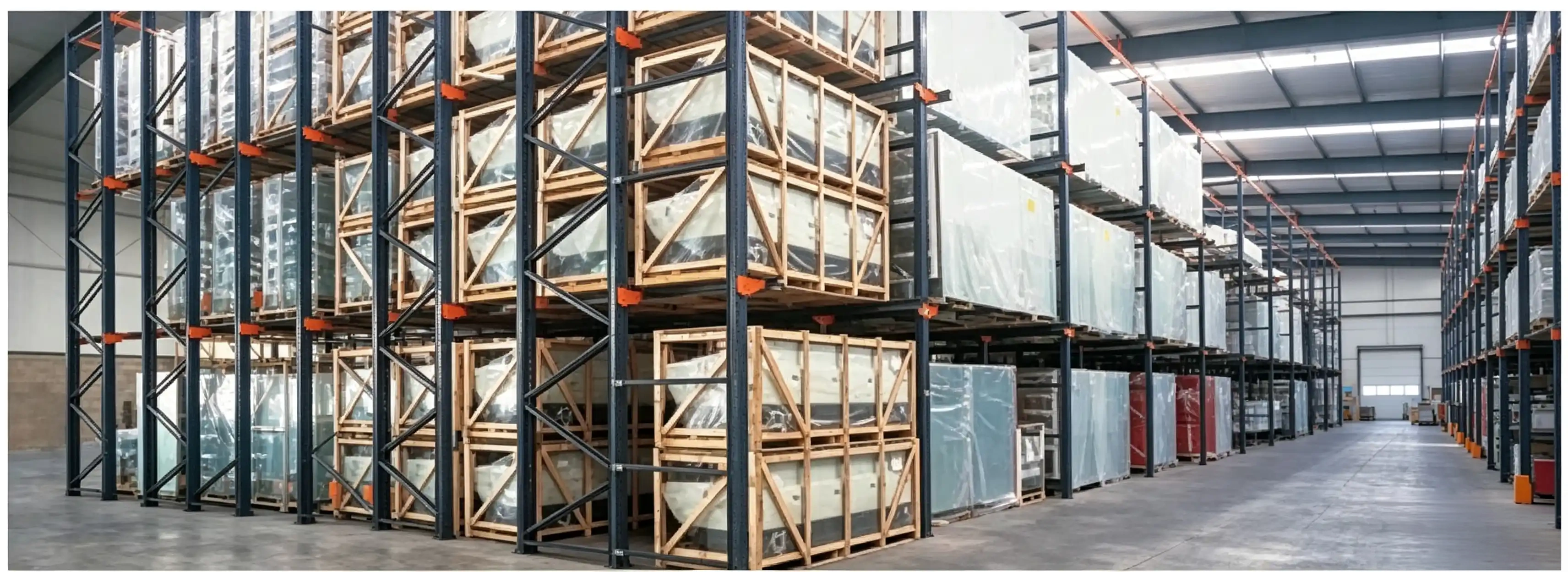
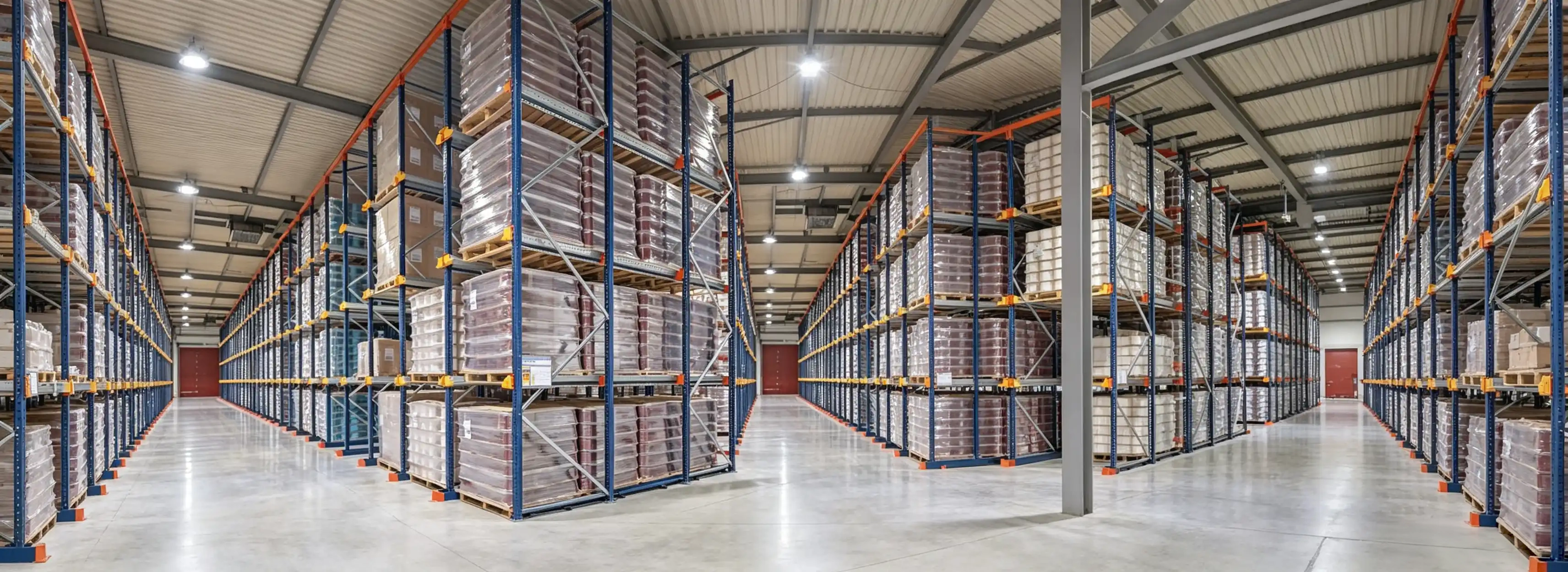
With rising warehouse rental costs and temperature-controlled maintenance expenses, high-density, intensive warehousing has become a core strategy for enterprises to reduce costs and improve efficiency. Drive-through racking is a modern warehouse racking solution that balances efficient turnover and efficient inventory storage.

Capacity:10-400TPH
Capacity:10-400TPH
Capacity:10-400TPH

Drive-through Racking Advantages

Featuring a bidirectional through-lane design, drive-through racking delivers comprehensive strengths in space utilization, FIFO stock rotation, operational safety, upfront investment, energy consumption and inventory control. It perfectly balances high-density storage and orderly turnover of time-sensitive goods for various warehouses.

Scientific Inventory Turnover, Suitable for Time-Consuming Goods

With open shelving at both ends, goods enter from one side and exit from the other, ensuring a stable first-in, first-out (FIFO) system. Goods that enter first are retrieved first, meeting the storage needs of perishable goods such as fresh produce, cosmetics, and chemicals, resulting in orderly inventory flow.

Maximizing Warehouse Space and Expanding Storage Capacity

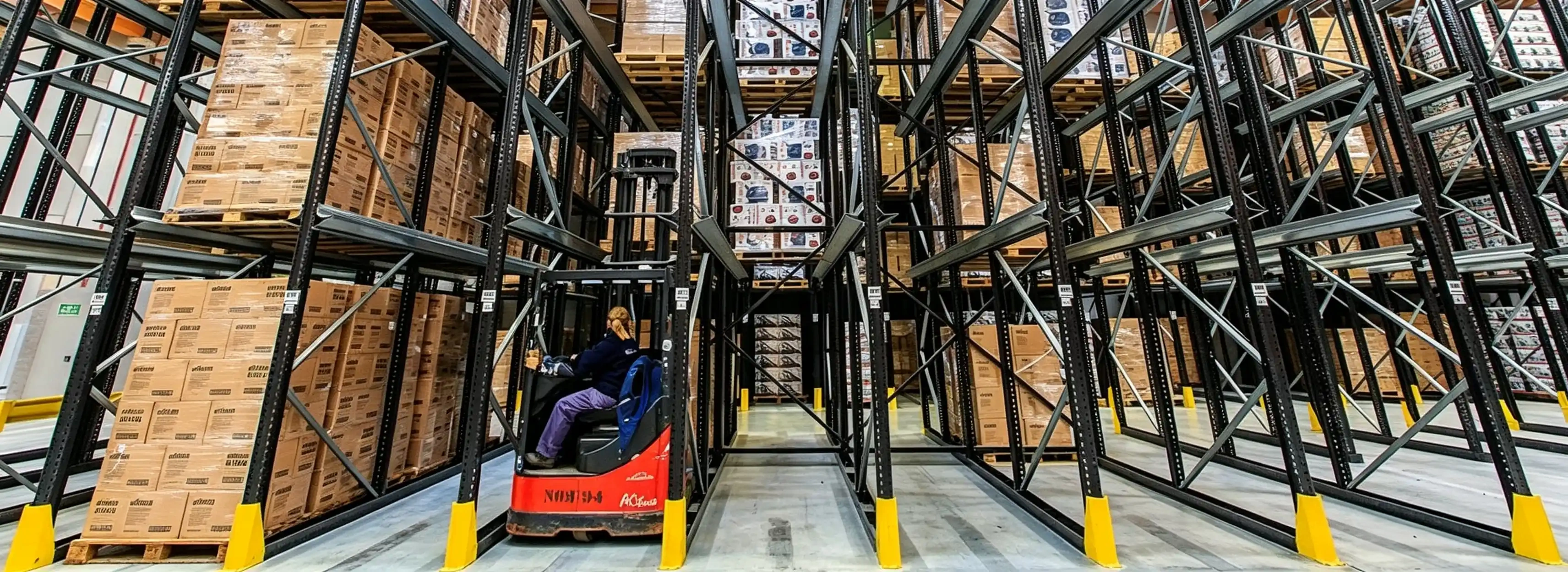
Eliminating multiple independent operating aisles, the aisles directly support forklift traffic, fully utilizing the warehouse floor area and vertical height. Closely arranged pallets maximize the use of vertical storage space, significantly increasing overall storage density and volume utilization

Efficient and Safe Operations, Enhancing Throughput Capacity

Forklifts enter and exit in one direction only, eliminating the need to reverse out of the aisles, simplifying warehousing operations. This reduces the probability of forklift collisions with shelves and goods, accelerates the inbound and outbound speed, and significantly increases overall warehouse throughput

Economical Investment and Controllable Initial Costs

Compared to push-back and gravity-flow storage systems, drive-in racking has a simpler structure and fewer components, achieving high-density storage with lower initial investment, making it a cost-effective high-density warehousing solution.

Reduced Temperature Control Energy Consumption and Long-Term Operating Expenses

With goods stacked compactly, the empty space requiring refrigeration and heating in cold storage and temperature-controlled warehouses is significantly reduced, lowering the load on temperature control equipment and significantly reducing long-term water and electricity consumption

Simple and Clear Inventory Management, Reducing Operational Errors

Each aisle stores only a single SKU of goods, with organized product zoning. Daily inventory checks and inbound/outbound control processes are simpler, reducing errors in sorting and preparation from the source, and making it suitable for storing large quantities of the same type of goods.

Drive-through Racking Application

Drive-through racking leverages the characteristics of bidirectional connectivity, first-in-first-out (FIFO), and high-density intensive storage. It is suitable for standardized pallet warehousing across multiple business formats, taking into account multiple needs such as timeliness control, bulk stockpiling, low-carbon operation and maintenance, and efficient transshipment, and is applicable to large-scale warehousing operation scenarios in various industries.
Time-sensitive Goods Storage with Shelf Life Control
Suitable for the food and beverage, chemical, daily chemical and cosmetic, and grain, oil, and agricultural supplies industries. Two-way drive-in shelving enables first-in, first-out (FIFO) delivery, prioritizing the shipment of goods that arrived earliest and effectively preventing expired or spoiled goods. Its use in cold storage and temperature-controlled warehouses can also reduce temperature-controlled space and refrigeration energy consumption.
Large-volume, Single-category, Intensive Warehousing Scenarios
Suitable for grain, oil, building materials, and bulk standardized goods storage. Eliminating redundant aisles, densely stacking pallets of the same size maximizes warehouse space utilization, suitable for operating models with large single-item inventory and low demand for piecemeal picking.
Material Buffer Area in Manufacturing Workshops
Suitable for various processing plants, serving as a transit buffer area for raw materials, semi-finished products, and finished products. Clearly separating materials from different production batches ensures a stable and continuous supply to the production line, guaranteeing uninterrupted processing operations.
Regional bulk distribution warehouses
The first choice for goods centers and distribution transit warehouses in various regions. They centrally store the same type of goods, and ship them out in whole pallets, shortening forklift travel routes and greatly improving the efficiency of sorting and distribution of large quantities of goods.
TIf a warehouse has needs such as batch time-sensitive management, large-volume warehousing, cold chain energy saving, and factory transit and distribution, drive-in racking can simultaneously take into account storage density and cargo turnover efficiency, effectively reducing the overall costs of space, energy consumption and labor, making it an ideal choice for high-density time-sensitive warehousing.

How to choose a drive-through racking manufacturer

Shelving supports goods and is crucial for warehouse safety. Reliable manufacturers control every aspect from design and materials to construction and after-sales service. Inferior manufacturers are prone to safety hazards such as insufficient load-bearing capacity, rust and deformation, which directly affect warehouse operations and personnel safety. Choosing the right manufacturer ensures safety, durability and long-term peace of mind.
Assess Manufacturer's Customized Design Capabilities
Prioritize manufacturers who can provide on-site warehouse measurements and discuss cargo specifications. Reject suppliers who only sell standard pre-fabricated shelving. Require manufacturers to perform load-bearing capacity calculations and develop customized layout plans based on pallet dimensions, cargo load, warehouse ceiling height, and the humid environment of cold storage. Request shelving structural drawings and load-bearing test reports to verify structural safety design and avoid potential collapse or deformation hazards due to unreasonable design.
Verify Raw Material and Manufacturing Process Quality
Confirm the steel grade used for uprights and beams, and request material quality inspection reports to ensure overall load-bearing capacity meets standards. Confirm surface treatment processes based on the warehouse environment: hot-dip galvanizing is used for cold storage and high-humidity workshops, while electrostatic powder coating is used for ordinary warehouses. Rust prevention directly determines the shelving's lifespan. If possible, visit the production workshop to inspect the cutting, welding, and grinding processes to minimize weld defects and component deformation issues.
Verify Experience with Similar Industry Projects
Prioritize manufacturers with mature case studies of drive-in racking systems in food cold chain, chemical, grain and oil, production plants, and regional distribution warehouses. Request real-life project case studies and customer contact information from manufacturers. Consult with existing clients about their actual usage experiences. Manufacturers with experience delivering large-scale, high-density warehousing projects are better positioned to understand details such as first-in, first-out (FIFO) aisle dimensions and forklift clearance.
Assess Installation, Delivery, and On-site Construction Capabilities
Confirm that the manufacturer has its own professional installation team and does not outsource to individual workers to avoid misalignment and inadequate connections. Clearly define the production cycle, logistics, and phased installation plan to match the warehouse downtime renovation schedule. Provide a comprehensive acceptance checklist upon completion of construction, verifying item-by-item verticality, load-bearing capacity, and the completeness of safety protection accessories.
Compare Quotations and Overall Costs
Don't just look at the unit price. Compare the thickness of the steel materials, anti-corrosion processes, and accessory configurations. Lower-priced, thinner racking systems will have higher maintenance and replacement costs later on. Confirm that the quoted price includes shipping, installation, taxes, anti-collision feet, guide rails, and all other accessories to prevent hidden additional charges later..
Comprehensive After-Sales Support System
Clearly define the overall warranty period for the racking system; the warranty period for main load-bearing components such as uprights and beams must be clearly written into the contract. Confirm the after-sales response time; in case of deformation or damaged parts, can replacement parts be quickly dispatched and on-site repairs provided? Long-term partners can provide annual on-site safety inspection services, regularly tightening connections and checking for safety hazards.
Warehouse safety and long-term operation are of paramount importance. It is recommended to prioritize reputable drive-in racking manufacturers with complete qualifications, rich experience, and comprehensive after-sales service to use professional and reliable warehousing solutions to mitigate safety risks and reduce overall operating costs.

How to reduce drive-through racking cost

Warehousing costs are rising year by year. While drive-in racking can store goods at high density and achieve first-in, first-out (FIFO), improper planning can increase additional expenses. The following article shares cost control methods from several aspects, including layout, protection, pallets, load-bearing capacity, and shelf height, balancing safety and cost.
Optimize Aisle Depth Planning to Avoid Wasted Space
Key Points: Arbitrarily deepening or lengthening storage aisles is strictly prohibited. Aisle depth must be designed in conjunction with the total inventory of individual items. Drive-in racking only achieves its cost advantage when a single aisle holds ≥3 pallets of the same product category. Using excessively deep aisles with 10+ pallets of low-turnover goods will result in large areas of empty honeycomb, increasing manual restacking costs. Optimization Suggestions: Divide aisles according to the monthly inbound and outbound volume of individual items. Allocate deep aisles to high-inventory items and shallow aisles to small-batch items. Each aisle should store only a single SKU, avoiding mixing multiple products to reduce honeycomb losses at the source. Initially, synchronize nearly one year's inventory data with the manufacturer, allowing technical personnel to calculate the optimal aisle depth.
Equip with Complete Anti-collision and Protective Accessories to Reduce Long-Term Maintenance Costs
Key Points: Forklifts driving directly into the racking system can easily cause deformation of uprights and aisle ends due to forklift impacts. Adding end guardrails, upright foot guards, and floor guide rails can significantly reduce the frequency of rack maintenance and replacement. Recommendation: All aisle entrances and front-row uprights should be equipped with anti-collision foot guards as standard. Thick protection should be added to areas where high forklifts pass. Install floor guide rails in main warehouse aisles and turning points to standardize forklift routes. Include protective accessories in the rack package price; separate procurement will increase additional costs.
Standardized Pallets for Smooth and Efficient Storage and Retrieval
ey Points: Drive-in racking relies on rails to support pallets; therefore, standard pallets with uniform dimensions and load-bearing capacity must be used. Damaged or non-standard sized wooden pallets are prone to jamming and scratching the racks, lengthening loading and unloading times. Recommendation: Use uniform pallet specifications throughout the warehouse. Determine pallet length, width, and forklift entry height in advance, and simultaneously provide the racking manufacturer with the rail design. Regularly inspect and discard damaged pallets; do not store deformed or missing pallets. For cold chain and heavy-duty scenarios, prioritize plastic pallets, as they are more durable than ordinary wooden pallets.
Precisely Match Load-Bearing Specifications to Reduce Excessive Steel Investment
Key Points: Collaborate with manufacturers to conduct warehouse layout and load-bearing calculations. The racking's load-bearing capacity should match the actual weight of the goods. Using heavy-duty, thickened beams for low-weight goods significantly increases the total steel procurement cost, resulting in budget waste. Recommendation: Design beams according to the weight of goods in different areas. Use medium-weight beams for light goods areas and reinforce heavy goods areas separately. Provide the full-load weight of the pallets to the manufacturer for a professional load-bearing calculation, avoiding excessive material usage. Don't blindly pursue thicker steel; a reasonable structural design is more cost-effective and safer than simply thickening the profiles.
Customize Layer Heights to Maximize Vertical Storage Space
Key Points: A uniform layer height creates a large amount of unused vertical space, consuming extra steel. Customize layer spacing based on the actual height of the palletized goods to eliminate vertical waste and reduce overall steel consumption. Recommendation: Measure the total height of pallets for different goods and set differentiated beam heights for different areas. For lighter goods on the upper shelf, appropriately reduce the shelf height; for heavier goods on the lower shelf, allow sufficient safety margin for forklift operation. The shelf height design should include ventilation and safe clearance for picking and placing items, balancing cost savings and operational safety.
Alternative Solution Suggestions
Key Points: With a large number of SKUs and low inventory levels per item in the warehouse, frequent restocking using drive-in racking will generate hidden costs. Optimization Suggestions: For multi-category, quick-pick scenarios, compare the overall usage costs of push-back racking and gravity flow racking. Provide data on average pallet count per item, whether the goods are kept fresh, and pallet load capacity to allow manufacturers to calculate the optimal racking solution.
Warehousing costs are rising year by year. While drive-in racking can store goods at high density and achieve first-in, first-out (FIFO), improper planning can increase additional expenses. The following article shares cost control methods from several aspects, including layout, protection, pallets, load-bearing capacity, and shelf height, balancing safety and cost.

Contact Us Now!

Contact us now via email: info@stackshelves.com, or fill in the form below.

Please specify your requirement by referring to the following aspects:

    1- Describe the type of project (e.g., logistics warehouse, cold storage, factory workshop, tire storage center, e-commerce fulfillment hub, etc.).

    2- List the specific racking or type (e.g., pallet racking, cantilever racking, tire racking, industrial shelving, heavy duty storage rack, etc.).

    3- Tell us your estimated rack installation or project launch date.

    4- Detail your specific requirements or expectations (e.g., warehouse size, load capacity, storage environment, etc.).

    5- If you are interested in becoming our distributor, please let us know.

*We respect your privacy, and will not share your personal information with other entities.

Contact Us Now!

Contact us now via email: info@stackshelves.com, or fill in the form below.

Please specify your requirement by referring to the following aspects:

    1- Describe the type of project (e.g., logistics warehouse, cold storage, factory workshop, tire storage center, e-commerce fulfillment hub, etc.).

    2- List the specific racking or type (e.g., pallet racking, cantilever racking, tire racking, industrial shelving, heavy duty storage rack, etc.).

    3- Tell us your estimated rack installation or project launch date.

    4- Detail your specific requirements or expectations (e.g., warehouse size, load capacity, storage environment, etc.).

    5- If you are interested in becoming our distributor, please let us know.

*We respect your privacy, and will not share your personal information with other entities.